

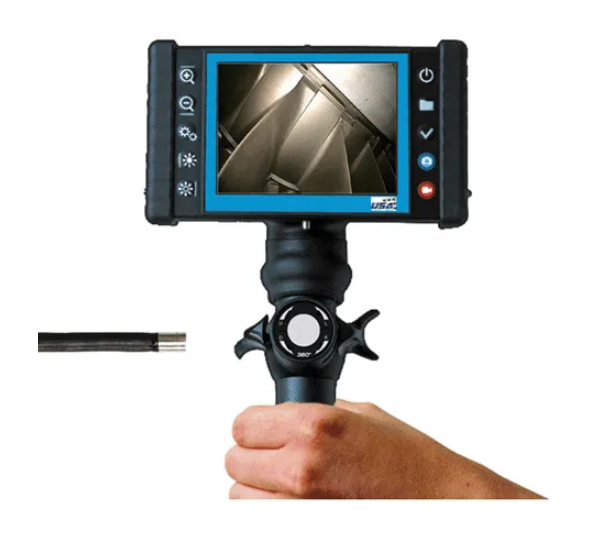
Buying a measuring borescope can feel deceptively simple: compare specs, pick a probe diameter, and move on. In practice, the best system is the one that matches your access constraints, your measurement requirements, and your reporting workflow – without forcing your team to fight the tool on every inspection.
A measuring borescope is more than a camera on a cable. It’s a measurement system that needs the right optics, geometry, software, and technique to produce usable, repeatable results. Companies like USA Borescopes work with inspection teams across industries, so they’ve seen the pattern: most disappointing purchases happen when teams choose based on a single spec (like diameter) instead of the full inspection reality.
This guide lays out a practical framework for choosing a measuring borescope that fits your engines, your access points, and the decisions you need to make.
Step 1 – Define the Inspection Job
Start with the work, not the device. The right measuring borescope is dictated by the components you inspect most often and the decisions you need measurement to support.
Write down:
-
- What you inspect: turbine blades/vanes, combustors, gearboxes, cylinders, piping, castings, weld roots, etc.
- Where you access from: ports, plugs, inspection panels, bores, drain holes.
- What defects you’re tracking: cracks, nicks, erosion, pitting, spalling, heat distress, coating loss.
- What you need to measure: length, depth, area, edge breaks, material loss.
- How results are used: immediate go/no-go, monitoring over time, engineering review, QA documentation.
This job definition becomes your filter. If a system can’t consistently reach and capture the targets you care about, no amount of software features will save the purchase.
The Three Questions That Prevent Wrong Purchases
Before you look at a single product page, answer:
-
- Where do we actually need to reach? (depth, bends, ports, target locations)
- What must we measure to make decisions? (length, depth, area, trending)
- How will we document and share results? (reports, image overlays, exports, storage)
If any of these are unclear, the buying process usually drifts toward best looking brochure rather than best operational fit.
Step 2 – Probe Diameter, Working Length, and Reach
Probe diameter and length are often treated like the only specs that matter. They matter a lot – but the tradeoffs are real.
Probe diameter: fit vs. performance tradeoffs
Smaller diameter probes can access tighter pathways. But depending on the system, smaller probes may also mean less light capture, potential compromises in brightness, and a narrower set of measurement-enabled options. You want the smallest diameter that still gives you reliable imaging and measurement in your actual environment (oil haze, soot, reflective surfaces, etc.).
Working length: reach vs. controllability
Longer probes help you reach deeper targets, but they can be harder to steer and stabilize – especially in complex geometry. If your typical inspections require long reach, prioritize:
-
- Smooth articulation control
- Tip stability/locking features
- A practical insertion workflow your team can repeat consistently
A good buying process includes a realistic assessment of whether you can reach the target and hold a stable view for measurement.
Step 3 – Articulation and Navigation
Articulation is what turns a camera on a cable into a usable inspection tool. If your team is fighting navigation, inspections slow down, measurements become less reliable, and documentation quality drops.
Look at:
-
- 2-way vs. 4-way articulation: Four-way is often more flexible in complex pathways.
- Control style: joystick, dial, or lever; what feels natural for your technicians?
- Articulation stiffness and tip stability: measurement benefits from a stable, repeatable view.
- Tip locking or holding features: helpful when you need to capture multiple measurements without drift.
If possible, evaluate articulation with a mock-up that resembles real geometry – not just a straight tube demo. Real inspections involve turns, offsets, and surfaces that are rarely perpendicular to the lens.
When Dual-View Helps
Dual-view systems can reduce re-insertion by allowing you to see forward and sideways (or switch views quickly). This can be useful for:
-
- Confirming orientation around blades/vanes
- Seeing around edges and features
- Reducing the move, look, move again cycle in tight areas
Dual-view doesn’t replace good technique, but it can reduce time spent repositioning, which can indirectly improve measurement consistency.
Step 4 – Measurement Method and Accuracy Expectations

Measurement is where expectations can drift from reality. Many teams assume measurement is point, click, done. In truth, measuring borescopes are doing geometry-based estimation that depends on the quality of the view.
At a high level, measuring systems may use approaches such as:
-
- Stereo/3D methods (using multiple views to estimate depth and shape)
- Structured light concepts (projected patterns or light behavior to infer surface geometry)
- Software-driven 3D reconstruction based on calibrated optics and algorithms
You don’t need to be an engineer to choose well – but you do need to understand what affects measurement quality:
-
- Distance to the target
- Angle relative to the surface
- Surface reflectivity and texture
- Tip stability and image clarity
Practical takeaway: the best measuring borescope is the one that produces measurements your team can capture consistently in your real inspection conditions.
If you’re comparing systems, ask vendors to explain:
-
- What measurement modes are included (length, depth, area, etc.)
- What training or technique is required
- How measurements are validated or checked
- How results are documented and exported
Step 5 – Image Quality, Lighting, and Field of View
Measurement depends on edges, contrast, and clarity. If your image is blown out by glare, smeared by oil haze, or underlit in deep cavities, measurement precision drops.
Evaluate:
-
- Resolution and clarity at typical working distances
- Lighting control: can you adjust brightness to manage glare?
- Field of view: wide enough to frame context, narrow enough to see detail?
- Depth of field: can you keep the defect in focus without constant repositioning?
A common mistake is testing borescopes in clean, dry demo environments and then being disappointed when real-world conditions (oil sheen, carbon, reflective metal) reduce usable detail.
Step 6 – Software, Reporting, and Data Management
A measuring borescope isn’t just a device – it’s a workflow. The software can determine whether your team documents findings consistently or skips steps because it’s cumbersome.
Look for:
-
- Measurement overlays and annotations that are easy to add and interpret
- Exportable reports that match your QA and record-keeping needs
- Consistent file management (naming conventions, storage, retrieval)
- Review workflows that help supervisors and engineers evaluate results quickly
If reporting is painful, technicians will take fewer images, measurements will be missing, and you’ll end up with repeat inspections – exactly the opposite of what you bought measurement for.
Step 7 – Support, Service, and Total Cost of Ownership
A measuring borescope can be a long-term asset, but only if it stays in service and is supported when it needs maintenance.
Total cost of ownership includes:
-
- Repair turnaround time and availability of service
- Replacement parts and accessories
- Training time and learning curve
- Warranty terms and ongoing support
- Calibration checks or verification processes (where applicable)
A less expensive system can become costly if it’s frequently out of service or hard to support. Conversely, a higher-quality system can pay off if it keeps inspections consistent and reduces repeat work.
Quick Checklist Before You Buy
Use this checklist to pressure-test your selection:
-
- Can it reach the targets through your real access points?
- Can it hold stable views for measurement in your geometry?
- Does it measure what you actually need (length/depth/area)?
- Is image quality usable in your real environment (glare/oil/soot)?
- Can your team produce consistent documentation quickly?
- Is support available for repairs, accessories, and training?
If the answer to any of these is not sure, your next step shouldn’t be purchase – it should be a hands-on evaluation aligned with your real inspection scenarios.
Choose for Access + Measurement + Workflow

The best measuring borescope isn’t the one with the flashiest spec sheet – it’s the one your team can use confidently, repeatedly, and efficiently in the spaces you actually inspect. When you select based on access constraints, measurement requirements, and reporting workflow, you’re far more likely to end up with a tool that reduces downtime, prevents repeat inspections, and improves decision quality.
To explore configurations and accessories that fit different inspection needs, you can review USA Borescopes’products. If you want guidance based on your engine type, access points, or measurement goals, USA Borescopes can be a helpful resource – and you can always contact USA Borescopes to discuss options aligned with your workflow.
About the Author
The author is an independent inspection specialist with extensive experience helping maintenance teams implement remote visual inspection and measurement workflows. They focus on tool selection, repeatable technique, and documentation practices that reduce downtime and improve decision consistency. The author is not affiliated with any distributor or manufacturer and provides neutral, field-driven guidance.