

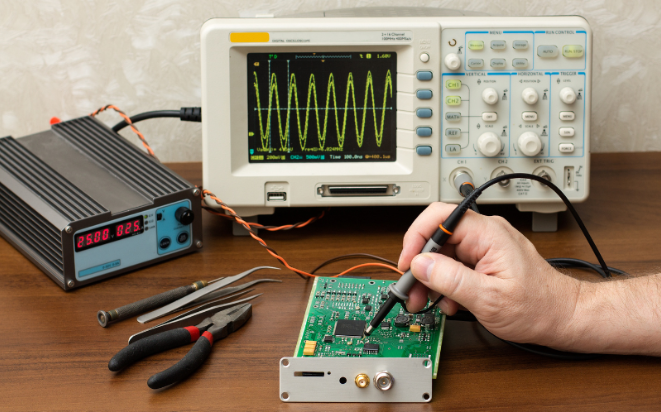
Signal analysis plays a critical role in modern electronics testing, and selecting the right test and measurement equipment depends on the specific application. Oscilloscopes and digitizers are key tools for capturing, measuring, and analysing electrical signals, but they serve different purposes. While oscilloscopes provide real-time visualisation of signals, digitizers focus on high-resolution data acquisition for later analysis. Understanding the differences between these instruments is essential for engineers, researchers, and technicians looking to optimise their testing processes.
Function and Purpose in Signal Analysis
Oscilloscopes are designed for real-time signal monitoring, making them ideal for diagnosing circuit behaviour and identifying transient events. They display waveforms on a screen, allowing users to observe signal characteristics such as amplitude, frequency, and noise. Engineers rely on oscilloscopes to troubleshoot faults in electronic circuits and evaluate system performance in real-time.
Digitizers, on the other hand, are specialised data acquisition devices that convert analog signals into digital data for processing and storage. They excel in applications that require long-term signal recording and post-processing analysis. Unlike oscilloscopes, digitizers do not typically provide an interactive waveform display but instead focus on collecting high-resolution data for further examination.
Sampling Rate and Bandwidth Considerations
Oscilloscopes offer a wide range of bandwidth options, with high-speed oscilloscopes capable of capturing signals in the gigahertz range. Their fast sampling rates ensure accurate representation of rapid signal changes, making them essential for applications such as high-frequency electronics and RF signal analysis.
Digitizers also feature high sampling rates but prioritise sustained data acquisition over immediate visualisation. They often provide deeper memory depth, allowing extended data capture periods without compromising signal integrity. This capability is particularly useful in applications such as communications testing, where capturing long-duration waveforms is necessary for identifying intermittent issues.
Use of Oscilloscope Current Probes in Testing
Oscilloscopes frequently integrate with specialised probes to enhance their measurement capabilities. An oscilloscope current probe enables the measurement of electrical currents without directly interfering with the circuit under test. These probes are essential for analysing power electronics, motor control systems, and high-speed switching applications.
While digitizers also support external sensors and probes, their primary function remains data acquisition rather than real-time measurement. Engineers working with power systems may prefer an oscilloscope for direct current analysis, whereas those focusing on data logging and long-term monitoring may find digitizers more suitable.
Applications in Different Industries
Oscilloscopes are widely used across industries that require immediate signal analysis. In telecommunications, they help engineers evaluate waveform distortions and signal integrity. In automotive electronics, they play a crucial role in testing embedded systems, engine control units, and sensor responses. Their ability to display waveforms instantly makes them invaluable for real-time diagnostics.
Digitizers excel in applications where high-speed data acquisition and storage are priorities. They are commonly used in scientific research, radar signal processing, and industrial automation. Their ability to capture continuous data makes them suitable for monitoring high-frequency signals over extended periods, ensuring that no critical information is lost.
Learn More: Understanding Clock Jitter: Causes and Effects in Electronics
Choosing Between an Oscilloscope and a Digitizer
Selecting between an oscilloscope and a digitizer depends on the specific testing requirements. Engineers looking to buy an oscilloscope should consider the need for real-time waveform analysis, signal visualisation, and troubleshooting capabilities. High-speed oscilloscopes are ideal for applications that demand precise waveform representation and interactive measurement features.
Digitizers are better suited for applications that require high-resolution data acquisition over long durations. They provide a structured approach to capturing and analysing signals in environments where immediate visual feedback is less critical. Researchers and industries involved in data logging, remote monitoring, and post-processing analysis often benefit from digitizer-based systems.
Oscilloscopes and digitizers serve distinct roles in signal analysis, with oscilloscopes excelling in real-time waveform monitoring and digitizers specialising in long-term data acquisition. Engineers and researchers must assess their testing requirements carefully to select the right instrument. Understanding the key differences between these tools ensures efficient signal analysis and optimised testing processes.
For more information about high-speed oscilloscope solutions, contact Genetron Singapore today.